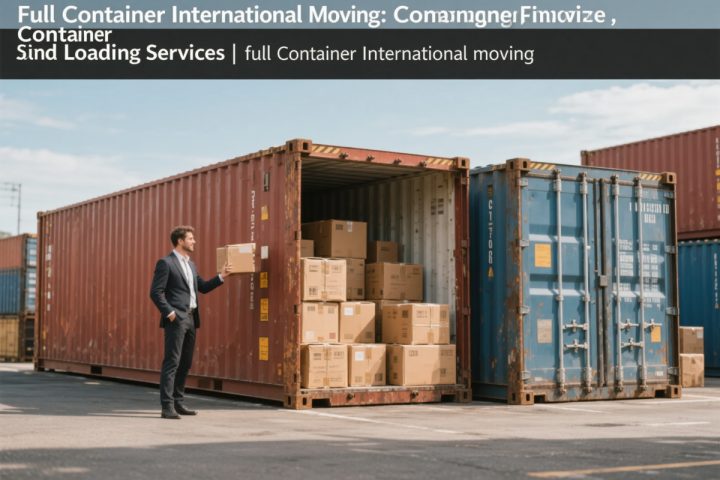
In this guide
- Understanding the Financial Scope of Full Container International Moving
- Comparing Container Sizes: 20-Foot vs. 40-Foot Options
- Analyzing Loading Services and Their Cost Implications
- Hidden Costs and Budgeting for International Relocation
- Financial Risks and Mitigation Strategies
- Maximizing Value Through Strategic Planning
- Frequently Asked Questions
- How much does a full container international moving typically cost?
- Can I save money by loading the container myself?
- What are the main hidden fees in international container shipping?
- Is insurance mandatory for a full container move?
- How do I choose between a 20-foot and 40-foot container?
- Sources
Understanding the Financial Scope of Full Container International Moving
Moving an entire household or business inventory across international borders is a complex logistical undertaking that carries significant financial implications. When individuals and corporations opt for a full container international moving service, they are committing to a substantial capital outlay that extends far beyond simple transportation fees. This decision requires a meticulous analysis of budgeting, currency exchange risks, insurance liabilities, and tax obligations associated with relocating assets globally. Unlike shared container options where costs are split, a full container arrangement provides exclusive use of the shipping unit, offering privacy and security but demanding a higher upfront financial commitment.
The economics of full container international moving are driven by several variables, including the specific dimensions of the container selected, the origin and destination ports, current fuel surcharges, and the complexity of loading services required. For finance professionals and homeowners alike, understanding the cost structure is paramount to avoiding unexpected deficits in the relocation budget. The choice between a 20-foot and a 40-foot container directly impacts the total expenditure, as does the selection of professional loading versus self-loading scenarios. Each variable introduces different risk factors and potential savings opportunities that must be weighed carefully before finalizing the move.
Furthermore, the financial landscape of international relocation involves navigating customs duties, value-added taxes (VAT), and import levies that vary significantly by country. A comprehensive approach to full container international moving must account for these hidden costs, which can sometimes exceed the actual freight charges if not properly planned. By analyzing the trade-offs between container sizes and service levels, stakeholders can optimize their spending while ensuring that their belongings arrive safely and legally. This guide explores the critical financial and operational decisions involved in securing a dedicated shipping unit for global transport.
Comparing Container Sizes: 20-Foot vs. 40-Foot Options
The foundational decision in any full container international moving project is selecting the appropriate container size. While both 20-foot and 40-foot containers serve the same fundamental purpose of protecting goods during transit, their capacity differences create distinct financial profiles and logistical requirements. The 20-foot container, often referred to as a standard dry van, offers approximately 1,170 cubic feet of space. This size is typically ideal for smaller households, single-person relocations, or businesses moving specific inventory batches. Because it utilizes less steel and requires less fuel to transport, the base freight rate for a 20-foot unit is generally lower than its larger counterpart.
In contrast, the 40-foot container, particularly the High Cube variant which adds an extra foot of height, provides roughly 2,390 cubic feet of volume. This nearly doubles the storage capacity compared to the 20-foot option. For families relocating with substantial furniture loads or companies moving office equipment, the full container international moving cost per cubic foot often becomes more economical with the 40-foot unit. However, this efficiency comes with a caveat: if the shipment does not fully utilize the space, the customer still pays for the entire container, potentially resulting in wasted funds on unused air space. Therefore, accurate volume estimation is a critical financial step before booking.
| Container Type | Approximate Volume (Cubic Feet) | Typical Use Case | Relative Cost Factor |
|---|---|---|---|
| 20-Foot Standard | ~1,170 cu ft | Small apartments, singles, light commercial | Base Rate (Lowest) |
| 40-Foot Standard | ~2,380 cu ft | Larger homes, medium offices, mixed loads | Approx. 1.5x Base Rate |
| 40-Foot High Cube | ~2,690 cu ft | Tall furniture, bulky machinery, high-volume goods | Approx. 1.6x Base Rate |
When evaluating the financial impact of full container international moving, it is essential to consider not just the ocean freight, but also the inland transportation costs. Larger containers may incur higher chassis fees and require specialized trucks for pickup and delivery at both ends of the journey. Additionally, port handling fees are often calculated based on the TEU (Twenty-foot Equivalent Unit) count. A 40-foot container counts as two TEUs in many port calculations, meaning the terminal handling charges can be double those of a 20-foot container. This structural pricing model means that the price difference between the two sizes is rarely linear; the 40-foot option is usually cheaper per unit of volume but demands a higher absolute cash outlay.
Beyond pure capacity, the physical dimensions influence what can be loaded. A 40-foot High Cube container allows for vertical stacking of tall items like wardrobes, pianos, or industrial machinery, which might not fit in a standard 20-foot unit without disassembly. Disassembly and reassembly services add labor costs and time to the process. If a 20-foot container cannot accommodate the load due to height restrictions, forcing the client to rent a second unit or pay for partial shipments would drastically increase the total cost of the full container international moving operation. Thus, choosing the right size initially is a strategic financial decision that prevents costly mid-process adjustments.
Analyzing Loading Services and Their Cost Implications
The method chosen for loading the container is a pivotal factor in the overall budget of a full container international moving project. Clients generally have three primary options: self-loading, professional full-service loading, or hybrid approaches. Each option presents a unique balance of labor costs, risk exposure, and time management. Self-loading involves the client packing and arranging all items inside the container themselves. While this eliminates labor charges from the mover’s invoice, it introduces significant risks regarding weight distribution, damage, and insurance validity. Insurance providers often scrutinize self-loaded containers closely, and claims may be denied if improper packing techniques are suspected.
Professional loading services, often termed “Full Service” or “Door-to-Door” loading, involve a team of experienced movers who pack, secure, and stack the cargo within the container. This service ensures optimal space utilization and proper bracing to prevent shifting during rough seas. For a full container international moving operation, the premium paid for professional loading is often justified by the reduction in insurance premiums and the assurance of compliance with international safety standards. These professionals utilize dunnage, shrink wrap, and strapping materials to maximize stability, reducing the likelihood of costly damage claims that could otherwise negate the savings from cheaper alternatives.
- Self-Loading: Lowest labor cost, highest personal effort, maximum risk of damage, potential insurance complications.
- Professional Loading: Higher labor cost, optimized space usage, reduced damage risk, streamlined insurance coverage.
- Hybrid Loading: Client packs boxes, professionals handle heavy furniture; moderate cost, balanced risk profile.
The financial calculus of loading services extends beyond the immediate invoice. Professional loaders possess the expertise to calculate weight distribution accurately, preventing overweight fines at customs or during transit. Overweight containers are a common issue in full container international moving, especially when clients attempt to overstuff a 20-foot unit. Fines can range from hundreds to thousands of dollars depending on the jurisdiction and the severity of the excess. Furthermore, improper loading can lead to container instability, causing delays at the destination port while inspections are conducted, which incurs demurrage and detention fees.
Another critical consideration is the speed of the process. Professional teams can load a container in a fraction of the time it takes an untrained individual, reducing the rental duration of the container itself if the client is paying for storage or chassis rental. In the context of full container international moving, time is money. Delays caused by inefficient loading can ripple through the supply chain, affecting downstream logistics and increasing the total cost of ownership for the shipment. Investing in expert loading services is frequently a prudent financial strategy for those seeking to minimize total lifecycle costs rather than just the initial freight bill.
Hidden Costs and Budgeting for International Relocation
While the headline price of a full container international moving quote often attracts attention, savvy financial planning requires a deep dive into the ancillary costs that frequently appear after the contract is signed. One of the most significant hidden expenses is the Ocean Freight Surcharge, which fluctuates based on oil prices, seasonal demand, and geopolitical stability. During peak moving seasons, such as summer months or year-end holidays, carriers may apply Peak Season Surcharges (PSS) that can increase the base rate by 20% to 50%. Understanding these cyclical trends is vital for timing the move to optimize cash flow.
Demurrage and detention fees represent another area where budgets can quickly spiral out of control. Demurrage is charged by the carrier for keeping the container at the port beyond the free time allowance, while detention is charged for holding the container outside the port at the consignee’s location. If the full container international moving timeline is not meticulously managed, these daily fees can accumulate rapidly, often exceeding the original freight cost. Free time allowances vary by port and carrier, so negotiating extended free time during the initial booking phase is a recommended financial safeguard.
Customs duties and taxes are perhaps the most unpredictable element of international relocation finances. Different countries have varying thresholds for duty-free imports, particularly for used household goods. Many nations allow tax exemptions for permanent residents bringing in their personal effects, but strict documentation is required to prove eligibility. Failure to provide the necessary paperwork, such as a detailed inventory list certified by a notary or customs broker, can result in the seizure of goods or the imposition of full import taxes on the entire container’s contents. Engaging a licensed customs broker early in the process is a wise investment to navigate these regulatory landscapes and avoid punitive financial penalties.
Insurance is another non-negotiable line item that should be evaluated critically. Basic carrier liability under the Hague-Visby Rules often covers only a nominal amount per kilogram, which is insufficient to replace valuable household items or business equipment. Purchasing All-Risk Marine Insurance provides comprehensive coverage but adds to the upfront cost. When calculating the total budget for a full container international moving project, it is advisable to allocate 1% to 2% of the total declared value of the goods for insurance. This small percentage acts as a hedge against catastrophic loss, ensuring that the financial impact of a disaster does not bankrupt the relocation effort.
Financial Risks and Mitigation Strategies
Engaging in full container international moving exposes the client to various financial risks that extend beyond standard logistics. Currency exchange rate volatility is a primary concern for cross-border transactions. Since freight quotes are often issued in US Dollars or Euros, but local payments may be required in other currencies, fluctuations in exchange rates can alter the final cost significantly. For large shipments, even a 5% swing in currency value can translate to thousands of dollars in additional expenses. Hedging strategies or locking in exchange rates through forward contracts can mitigate this risk, though they may come with their own transaction fees.
Damage and loss remain persistent risks despite advances in container technology. While modern containers are robust, the journey involves multiple handoffs, including trucking, rail, and port cranes. The financial impact of damaged goods can be devastating, particularly for businesses moving inventory or families moving heirlooms. To mitigate this, clients should invest in comprehensive insurance and ensure that the full container international moving provider has a proven track record of safety and reliability. Conducting thorough pre-loading and post-discharge inspections, documented with photos and videos, creates an indisputable record that supports any future claims.
- Conduct a Pre-Move Audit: Hire a third-party surveyor to assess the volume and condition of goods before loading to establish a baseline for insurance claims.
- Verify Carrier Credentials: Ensure the shipping line and freight forwarder are members of recognized industry bodies like FIATA or WCA to guarantee financial stability.
- Secure Comprehensive Insurance: Do not rely solely on carrier liability; purchase independent marine cargo insurance for full value coverage.
- Negotiate Free Time Extensions: Request extended demurrage and detention free time at the destination port to buffer against unforeseen delays.
- Hire a Customs Broker: Engage a local expert to handle clearance procedures and prevent costly hold-ups or fines.
Regulatory changes also pose a financial threat. Trade wars, sanctions, or new environmental regulations can suddenly alter the cost structure of international shipping. For instance, carbon emission taxes or low-sulfur fuel mandates can lead to sudden surcharges. Staying informed about global trade policies and maintaining flexibility in the relocation schedule allows clients to adapt to these changes without incurring excessive penalties. A proactive approach to risk management is essential for anyone undertaking a full container international moving project, as it transforms potential financial disasters into manageable operational challenges.
Maximizing Value Through Strategic Planning
To achieve the best financial outcome in a full container international moving scenario, strategic planning is key. This involves consolidating shipments, optimizing packing density, and leveraging market knowledge. One effective strategy is to plan the move during off-peak seasons. Shipping rates drop significantly during winter months and early spring, offering substantial savings for those with flexible timelines. Additionally, consolidating multiple smaller shipments into a single full container international moving order can reduce per-unit costs and simplify customs clearance, although this requires careful coordination of timing.
Optimizing the load is another avenue for cost reduction. By using space-saving techniques, such as disassembling furniture and nesting items, clients can maximize the utility of the chosen container size. This reduces the need to upgrade to a larger, more expensive container. Professional loaders are trained in these techniques, making them a valuable asset in the budget equation. Furthermore, reviewing the inventory beforehand and selling or donating items that are no longer needed can reduce the overall weight and volume, potentially lowering freight charges and import duties based on weight-based tariffs.
Finally, building a strong relationship with a reputable freight forwarder can yield long-term financial benefits. Forwarders with established networks can offer better rates, prioritize shipments during congested periods, and provide valuable insights into local regulations. They act as financial advisors in the logistics space, helping clients navigate the complexities of international trade. By treating the relocation as a strategic business decision rather than a one-off expense, clients can ensure that their full container international moving experience is both financially sound and operationally efficient.
Frequently Asked Questions
How much does a full container international moving typically cost?
The cost of a full container international moving varies widely based on distance, container size, and current market conditions. Generally, a 20-foot container can range from $2,500 to $6,000 for ocean freight alone, while a 40-foot container may cost between $4,000 and $9,000. These figures exclude inland transportation, insurance, customs duties, and loading services, which can add several thousand dollars to the total. It is crucial to request a detailed breakdown from your freight forwarder to understand the full scope of the financial commitment.
Can I save money by loading the container myself?
While self-loading eliminates labor costs, it often leads to higher overall expenses due to increased risk of damage, potential insurance claim denials, and inefficiencies in space usage. Improper loading can result in fines for overweight containers or damage to goods, which can far exceed the savings on labor. For a full container international moving project, professional loading is usually the more cost-effective option in the long run because it ensures safety and maximizes the utility of the container space.
What are the main hidden fees in international container shipping?
Common hidden fees include demurrage and detention charges if the container is not picked up promptly, customs brokerage fees, terminal handling charges, and fuel surcharges. Additionally, there may be costs for special permits if the cargo includes restricted items. When budgeting for full container international moving, always ask your provider about potential surcharges and negotiate free time allowances to avoid these unexpected costs.
Is insurance mandatory for a full container move?
While not legally mandatory in all jurisdictions, insurance is highly recommended and often required by lenders or banks if the move is part of a secured transaction. Carrier liability is extremely limited, covering only a small fraction of the goods’ value. To protect your financial investment, purchasing All-Risk Marine Insurance is essential for any full container international moving operation to ensure full reimbursement in case of loss or damage.
How do I choose between a 20-foot and 40-foot container?
The choice depends on the volume of your goods and your budget. A 20-foot container is suitable for smaller loads and is cheaper upfront, but the cost per cubic foot is higher. A 40-foot container offers more space and a lower cost per unit of volume, making it more economical for large households or businesses. Accurately estimating your inventory volume is the first step in deciding which full container international moving option provides the best value for your specific needs.
Sources
- World Trade Organization (WTO) – International Trade Statistics
- International Federation of Freight Forwarders Associations (FIATA)
- Bureau of Transportation Statistics (BTS) – Freight Analysis Framework
- U.S. Customs and Border Protection (CBP) – Import/Export Regulations
- Federal Maritime Commission (FMC) – Ocean Freight Rates and Practices